
- Region and Language
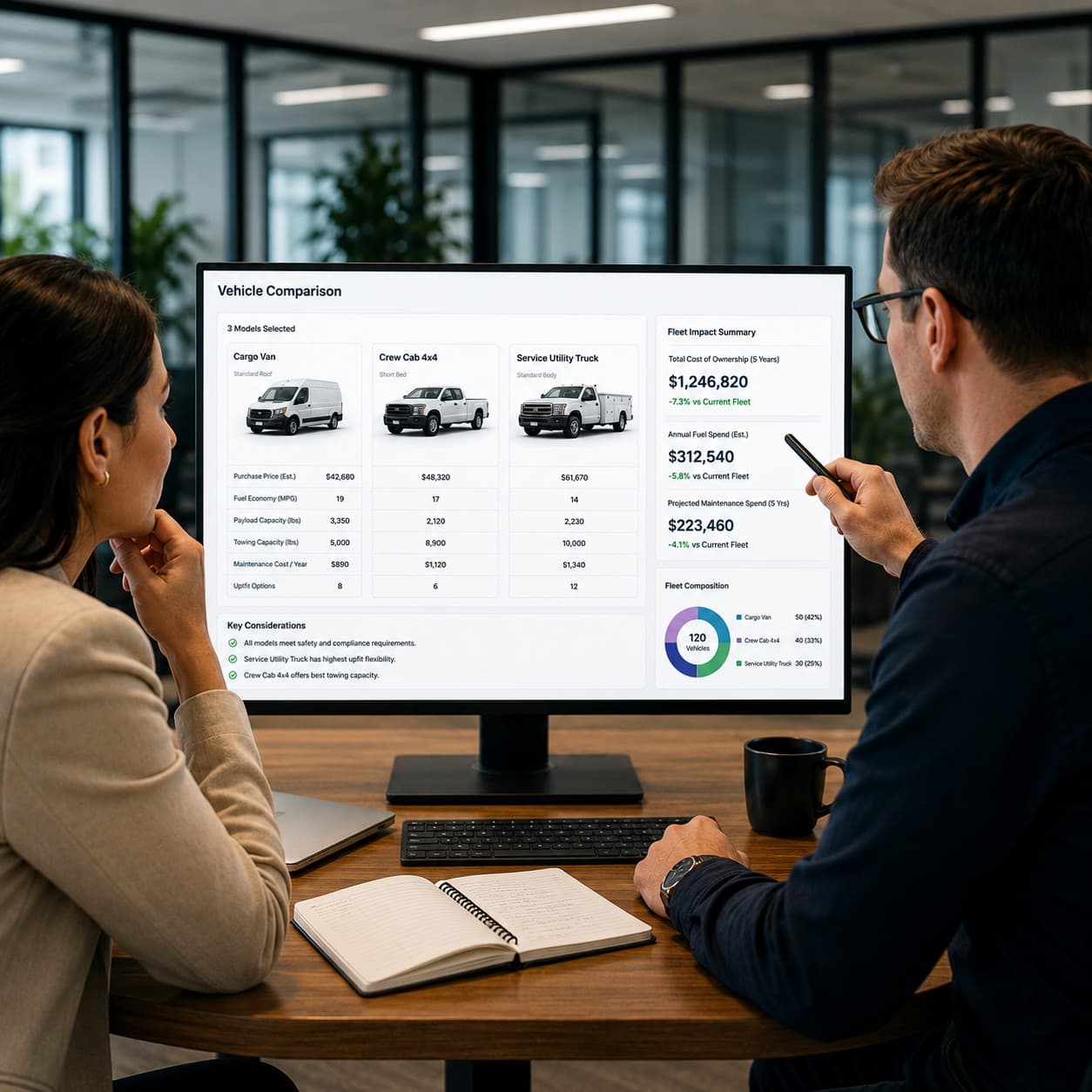
Fleet vehicle planning for model year 2027 requires a proactive, data-driven approach that balances operational needs, lifecycle costs, vehicle availability, and long-term business goals. Fleet leaders should evaluate replacement cycles, standardize vehicle specifications, align acquisition decisions with maintenance strategies, and build flexibility into their plans.
By planning early and focusing on total cost of ownership rather than purchase price alone, organizations can improve uptime, control costs, and maximize the value of every fleet vehicle.

Start fleet acquisition planning with business objectives and operational requirements rather than specific vehicle models or driver preferences.
Use lifecycle data to determine the optimal replacement window, balancing maintenance costs, residual value, and vehicle uptime.
Standardizing fleet vehicle specifications across job functions can simplify operations, reduce costs, and improve consistency.
Integrating acquisition, maintenance, and replacement strategies helps organizations improve total cost of ownership and support long-term fleet performance.
Start fleet acquisition planning with business objectives and operational requirements rather than specific vehicle models or driver preferences.
Use lifecycle data to determine the optimal replacement window, balancing maintenance costs, residual value, and vehicle uptime.
Standardizing fleet vehicle specifications across job functions can simplify operations, reduce costs, and improve consistency.
Integrating acquisition, maintenance, and replacement strategies helps organizations improve total cost of ownership and support long-term fleet performance.
Do you sometimes find that model year planning can feel like a moving target? Fleet vehicle availability shifts, business needs evolve, and market conditions rarely stay the same for long.
As we look ahead to model year (MY) 2027, we’ll explore what goes into successful planning beyond just deciding what make and model to order. We’ll look at how to evaluate your fleet strategy, align vehicles to business objectives, and make decisions that support long-term operational performance.
Here are five areas to focus on as you begin preparing for 2027 fleet vehicle acquisitions.
One of the most common mistakes organizations make during model year planning is starting with vehicle preferences instead of business requirements.
Before evaluating manufacturers, trims, or powertrains, take a step back and ask a few foundational questions:
What are our business priorities over the next three to five years?
How are driver roles evolving?
Are service territories expanding?
Have payload, towing, or cargo requirements changed?
Are there opportunities to improve sustainability or fuel efficiency?
The best vehicle is not necessarily the most popular model or the lowest-cost option. It's the vehicle that best supports the work being performed, while helping the organization achieve its broader objectives.
When budgets are tight, it can be tempting to keep vehicles in service for another year. But the better question isn't whether a vehicle can survive another year; it's what that extra year will cost. As vehicles age, maintenance expenses typically increase, downtime becomes more frequent, and resale values decline. These costs can quietly erode fleet performance and create operational disruptions that aren't always visible in budget reports. A proactive lifecycle strategy helps organizations identify the optimal replacement window for each vehicle class. Rather than reacting to major repairs or unexpected breakdowns, fleet leaders can make data-driven decisions based on maintenance history, utilization, residual values, and business requirements. For some fleets, extending vehicle life may make sense. For others, replacing vehicles earlier can reduce total cost of ownership and improve uptime. The key is understanding where that replacement sweet spot exists for your fleet.
As organizations grow, fleet specifications can gradually become more complex. Different branches may order different configurations. Driver preferences can influence vehicle selection. may introduce additional vehicle types into the fleet. Over time, this complexity creates inefficiencies. MY2027 planning presents an ideal opportunity to review vehicle standardization across the fleet. Standardizing vehicle classes, upfits, shelving packages, towing configurations, and other specifications can help:
Simplify ordering processes
Improve maintenance consistency
Reduce training requirements
Streamline inventory management
Support stronger resale outcomes
Standardization doesn't mean every vehicle must be identical. Rather, it means creating disciplined vehicle selection policies that align with specific job functions and operational needs. The result is often a fleet that is easier to manage and more predictable from a cost perspective.
Many organizations think about maintenance and acquisition separately. In reality, the two are closely connected. Vehicle selection decisions made today will influence maintenance costs for years to come. Similarly, replacement timing directly affects maintenance spending and vehicle availability. When planning for MY2027, fleet leaders should evaluate:
Review maintenance history by vehicle class and identify recurring issues that may influence future vehicle selection decisions.
Assess preventive maintenance compliance rates and determine whether current replacement cycles are helping or hindering maintenance performance.
Consider how factors such as high mileage, towing requirements, heavy payloads, stop-and-go driving, and extended idling affect vehicle wear and lifecycle costs. Organizations that connect acquisition and planning often gain a clearer understanding of total cost of ownership and can make more informed decisions about future vehicle investments. This aligns with a broader industry shift toward proactive fleet management, where vehicle uptime and technician productivity are treated as strategic business priorities.
If the past several model years have taught fleet leaders anything, it's that flexibility matters. While supply chain conditions have improved significantly from the challenges experienced earlier this decade, production schedules, allocations, and market dynamics can still influence acquisition timelines. Element continues to advise organizations to plan proactively and maintain contingency options where appropriate. As you prepare for MY2027, consider developing alternative scenarios:
Primary and secondary vehicle selections
Multiple OEM relationships where appropriate
Flexible replacement timing assumptions
Budget models that account for changing fuel or operating costs
Organizations that build flexibility into their fleet acquisition strategy are often better equipped to respond when market conditions shift unexpectedly.
Model year planning is often viewed as an annual procurement exercise. In reality, it's one of the most strategic decisions a fleet organization makes. The fleet vehicles you select today will influence operating costs, maintenance spending, driver productivity, customer service, and business performance for years to come.
That's why the most successful fleet leaders approach MY2027 planning with a long-term mindset. They look beyond vehicle pricing and focus on lifecycle costs, operational requirements, fleet standardization, maintenance strategy, and future business needs. Looking for help with your 2027 model year planning? who can help you every step along the way.